Blog
Latest article
Read More
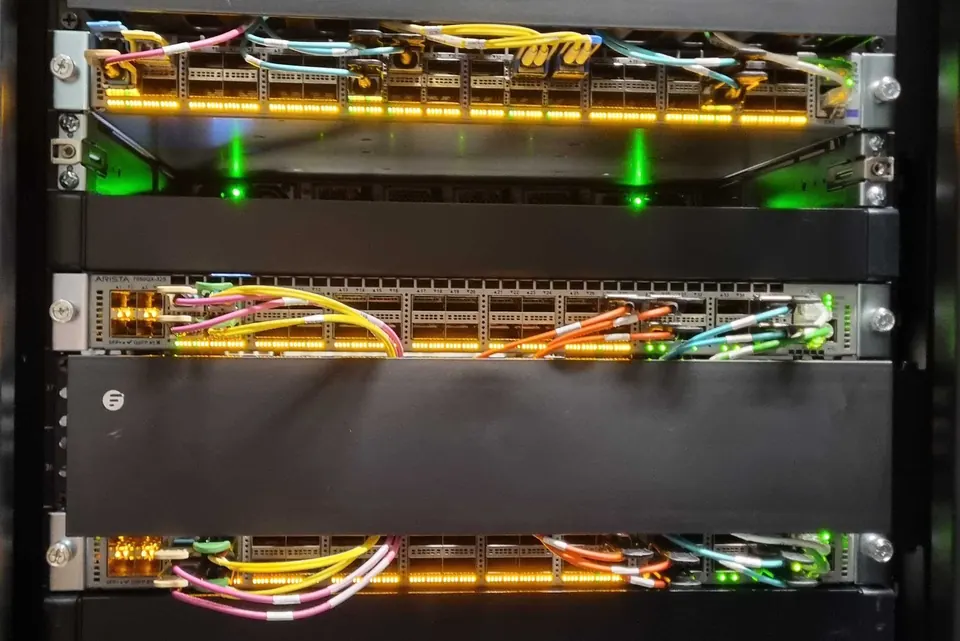
Who Owns the Internet? One Request, Followed Hop by Hop
No company or government owns the internet. It is about 78,000 separately run networks that have agreed to carry each other's traffic, and each one owns its own routers, its own contracts and sometimes its own fibre. We run one of those networks, AS55285. To show where the ownership sits, we traced a single request from our head office in Ottawa to a server we run in Amsterdam and named the owner of every piece it crossed, along with who pays whom.
Recommended articles
Read all

Game Server Performance: Bare Metal vs Virtual Machines
Bare metal wins on the two numbers that decide whether a game server feels good: worst-case tick time and worst-case latency. A single-tenant VM on hardware you control gets close. An oversold multi-tenant VPS is where fixed-tick simulation falls apart, because a vCPU scheduled a few milliseconds late is a missed tick every player sees as rubber-banding. This guide covers what a hypervisor adds to a tick loop, why the 95th-percentile tick time matters more than average throughput, how to measure steal time and MSPT on your own server, and when a VM is still the right call.
Game Servers
Read more

AlmaLinux vs RHEL: When Is a Red Hat Subscription Worth It?
AlmaLinux gives you the RHEL platform (same ABI, same ten-year lifecycle, same ecosystem) for free. Red Hat charges four figures a year per server for the real thing. The interesting question isn't which is cheaper; it's what, precisely, the subscription buys and who actually needs those things. This guide itemises the answer: support SLAs, ISV certifications, live patching and lifecycle add-ons on one side; Alma's genuine independence perks (including drivers Red Hat dropped) on the other, plus the free 16-system Red Hat option most people forget exists.
Linux
Read more

What Amsterdam's Full Power Grid Means for Servers Hosted There
Most of the electricity grid in Noord-Holland is full for new or larger connections from big users, and Amsterdam has stopped new data centres, and expansions of existing ones, until 2035. Servers already running in Amsterdam keep their power. The shortage is in new capacity: another building, a bigger grid connection, or a denser rack in an existing hall.
Infrastructure
Read more

Sensible Default Firewall Rules for a Linux Server
A fresh Linux server ships with no firewall rules at all. Every listener you start is instantly reachable from the whole internet. The fix is a short, well-understood baseline: default-deny inbound, allow established traffic, and an explicit allow-list for the services you actually run. This guide builds that baseline in nftables rule by rule, explains the parts everyone gets wrong (ICMP and IPv6), shows the same policy in ufw and firewalld, and covers how not to lock yourself out, plus the Docker port-publishing trap.
Security
Read more
Flexible, powerful, secure
Experience our reliable and powerful Bare metal solutions
- Full hardware controlDedicated resources, no noisy neighbors.
- Same advanced networkThe AS55285 network, DDoS mitigation and private networks our cloud instances use.
- Dedicated servers without barriersCloud-like flexibility on real hardware.

 Canadian and
  Dutch
Dutch