
OPNsense vs pfSense in 2026: What pfSense 26.10 and the CE/Plus Merger Change
OPNsense vs pfSense, November 2026: pick OPNsense 26.7 for a new firewall on your own hardware or as a VM on a dedicated server, because it is BSD-licensed and every major upgrade is free and needs no reinstall. Pick pfSense when it runs on a Netgate appliance, which keeps online upgrades for the life of the box, or when your team already runs pfSense and can reinstall at each major version. That reinstall is the rule Netgate announced on 29 October 2026 for pfSense 26.10, the release that merges CE and Plus into one free edition. It had not shipped on 21 November 2026. For advanced routing and multi-site VPNs, with BGP or OSPF across sites, VRFs and policy routing, VyOS is the better fit, if the team has the routing knowledge to run it without a GUI.
Dedicated servers
Order a dedicated server
- Stock configurations live in under a minute
- Full root
- Always-on DDoS mitigation
The versions compared are OPNsense 26.7.9, pfSense CE 2.9.2 and pfSense Plus 26.07.2, all current on 21 November 2026.
OPNsense vs pfSense by use case
OPNsense and pfSense are both FreeBSD firewalls built on the pf packet filter, with WireGuard, IPsec, OpenVPN, Suricata and CARP failover; the choice between them turns on licensing, upgrade terms and hardware, and VyOS enters for advanced routing.
| Use case | Pick | Deciding reason | Where the alternative wins |
|---|---|---|---|
| Homelab on a mini PC | OPNsense 26.7 | The next major release costs nothing and needs no reinstall | You want Snort 3 or Netgate's new GUI, free on amd64 from 26.10 |
| Small-office edge box | pfSense on a Netgate appliance | Online upgrades for the appliance's life, and TAC Lite comes with the purchase | Third-party hardware, where OPNsense upgrades in place for free |
| Virtual firewall on a dedicated server | OPNsense 26.7 for firewalling guests; VyOS when the host needs VRFs, policy routing or BGP | VyOS holds routing in its base configuration | OPNsense and pfSense: a web GUI, Suricata IDS/IPS, the plugin catalogue and easier daily operation for a small team |
| Multi-site VPN hub | VyOS for BGP or OSPF over WireGuard or IPsec between sites | Dynamic routing over the tunnels, with VRRP failover at the hub | OPNsense or pfSense for a GUI-managed hub; pfSense Plus for Netgate branches |
What changed for pfSense and OPNsense in 2026
In 2026 Netgate announced one pfSense edition with a new upgrade rule, and OPNsense shipped 26.1 on 28 January and 26.7 on 15 July.
pfSense 26.10 merges CE and Plus
pfSense 26.10 merges pfSense CE and pfSense Plus into one free edition. Netgate announced it on 29 October 2026 in "pfSense at 20", where Jim Thompson wrote that "pfSense software version 26.10 will be released before the end of November." Netgate's version table lists its release date as TBD.
Moving from CE 2.9 to 26.10 is free and in place. After that, the post says: "To move to a new version, reinstall from the installer at no cost. It saves and restores your configuration for you. Or, if you'd rather skip the reinstall, upgrade online in one step with a subscription." Netgate hardware is the exception: "online upgrades to every new version are included for the life of the appliance, with no subscription required." The subscriptions are the existing TAC tiers, which carry over: TAC Lite at $129, TAC Pro at $399 and TAC Enterprise at $799 a year (Netgate support, 21 November 2026).
No licence is named for the merged edition. The post says "We're also publishing the updated PHP and the FreeBSD source for 26.10 to GitHub", which leaves out the source of the new GUI and API.
OPNsense 26.7 and the business edition
OPNsense 26.7 "Xenial Xenops" moved interface assignments, gateway groups and firewall rules to the MVC/API pages (release notes). The image README puts 27.1 in January 2027. The paid business edition trails the community release: OPNsense BE 26.10, out on 28 October and unrelated to pfSense 26.10 beyond the number, "is based on the OPNsense 26.7.7 community version" (BE 26.10 notes).
OPNsense 26.7 is built on the FreeBSD 15.1 release, while Netgate lists CE 2.9, Plus 26.07 and the planned 26.10 on a snapshot of FreeBSD 16.0-CURRENT, the development branch, so any throughput gap between them measures two kernels as well as two firewalls.
pfSense vs OPNsense side by side: licence, upgrades, VPN, IDS and HA
OPNsense 26.7 and pfSense run the same VPN, IDS and failover software, and differ in which edition includes each feature and what it costs.
| Area | OPNsense 26.7 | pfSense CE 2.9 / Plus 26.07 | pfSense 26.10 (announced) |
|---|---|---|---|
| Licence and source | BSD 2-Clause, source on GitHub | CE: Apache 2.0. Plus: "closed source" (Netgate FAQ) | Not stated |
| Software cost | Free. Business edition €149 a year (shop) | CE free. Plus sold as a TAC subscription | Free |
| Major upgrade | In place and free | In place, from System > Update | Reinstall, or online with a subscription |
| GUI and API | MVC pages with a key-and-secret API | CE: PHP GUI, no Netgate API. Plus 25.07 and later: Netgate Nexus GUI and API | New GUI and API on every install; the PHP GUI goes "with notice" |
| WireGuard | In core | Package | Not stated |
| OpenVPN and IPsec | Built in, IPsec on strongSwan | Built in, on strongSwan; IKEv1 deprecated in 26.07.1 and 2.9.1, with removal "within the next year" | As 26.07 |
| IDS/IPS | Suricata built in, inline through netmap or divert | Snort and Suricata packages; Snort 3 and ThreatGate "exclusive to Netgate Nexus" in Plus 26.07 | Snort 3 with Intel Hyperscan, and ThreatGate, on every install |
| IP and DNS blocklists | Built in: "URL Tables (IPs)" and GeoIP aliases, and Unbound's "integrated dns blocklisting" | pfBlockerNG package: IP lists, GeoIP and "Domain Name (DNSBL) blocking via Unbound DNS Resolver" | Not stated |
| Add-ons | Plugins, System > Firmware > Plugins | Packages, from the Package Manager | Not stated |
| High availability | CARP, pfsync and XMLRPC config sync; unicast CARP since 24.7 | The same, with unicast CARP in Plus only | Unicast CARP on every install |
| Security fixes | PHP hotfix for CVE-2026-109618 and CVE-2026-109619 on 21 October 2026 | PHP packages for the same CVEs the same day, installed from SSH or the console | "We don't charge for security" |
| Paid support | Deciso, €329 a year, "5 x 8 (CET)" (shop) | TAC Lite, Pro or Enterprise | As 26.07 |
WireGuard in OPNsense and pfSense
OPNsense WireGuard has been part of the base system since 24.1 (30 January 2024); pfSense WireGuard is a package, and both run in the kernel. pfSense gains VPN > WireGuard once the package is installed. OPNsense has VPN > WireGuard from first boot, with Instances, Peers and a peer generator.
OPNsense and pfSense hardware requirements
OPNsense hardware requirements come in three documented tiers, all for x86-64 machines, each with a throughput range (hardware documentation):
| Tier | CPU | RAM | Storage | Throughput |
|---|---|---|---|---|
| Minimum | 1 GHz dual-core | 3 GB | 4 GB SD or CF card | 11-150 Mbps |
| Reasonable | 1 GHz dual-core | 4 GB | 40 GB SSD | 151-350 Mbps |
| Recommended | 1.5 GHz multi-core | 8 GB | 120 GB SSD | 350-750+ Mbps |
Netgate's minimum for third-party hardware is a "64-bit amd64 (x86-64) compatible CPU", "1GB or more RAM" and an "8 GB or larger disk drive". On a third-party mini PC, run Plus 26.07.2 or CE 2.9.2 or later: those releases disable the acpi_spmc driver, "which could cause a kernel panic on some hardware" (release notes).
Running OPNsense or pfSense as a VM on Proxmox
OPNsense and pfSense both run as Proxmox VE guests on VirtIO NICs, and the VM settings in Running OPNsense as a firewall VM on Proxmox apply to pfSense too. The firewall VM filters what passes through it, not the Proxmox host's own management address, which needs default firewall rules on the host.
pfSense has one setting to check. Netgate's Proxmox recipe says checksum offloading "must be disabled" on VirtIO interfaces, "otherwise the virtual machine will not properly pass traffic". Current versions try to disable it automatically on vtnet interfaces, so confirm that "Disable hardware checksum offload" is ticked under System > Advanced > Networking, and reboot if you changed it.
The Proxmox VE documentation sets multiqueue "equal to the number of vCPUs of your guest" and warns it "will increase the CPU load on the host and guest systems". FreeBSD's vtnet driver negotiates up to 8 queue pairs itself, with no ethtool -L step (vtnet(4)).
# on the Proxmox host: four queues on the LAN NIC, keeping its MAC address
qm set 101 --net1 virtio=BC:24:11:00:00:02,bridge=vmbr1,queues=4
# in the firewall's shell after a restart: expect 4
sysctl dev.vtnet.1.act_vq_pairs
PCI passthrough hands a physical NIC to the guest with its own FreeBSD driver and hardware offloads. The Proxmox wiki gives the cost: "the device is not available to the host anymore", and "VMs with passed-through devices cannot be migrated."
The 26.10 announcement does not name its new GUI; Netgate's Nexus post of 11 September 2026 calls Nexus "the future of the pfSense GUI" and warns that "Virtual machines as well as some third-party platforms may not support the new GUI".
VyOS as a pfSense alternative for advanced routing and multi-site VPNs
For advanced routing, VyOS is the stronger pfSense alternative: it is built for BGP and OSPF across sites, VRFs, policy-based routing, VRRP failover and WireGuard or IPsec meshes with dynamic routing over them, and the cost is a router with no GUI that assumes routing knowledge.
The 1.5 documentation covers each: VRFs that run their own BGP and OSPF, policy routes that pick a routing table or VRF per interface, VRRP for "active/backup redundancy for routers", OSPF over WireGuard in the high-availability walkthrough, and DMVPN, for which "BGP is particularly well suited". The configuration can live in code: the HTTP API "accepts set, delete, and comment commands" and commits them, and "VyOS can be configured using Ansible" (Ansible page). The WireGuard site-to-site guide builds a two-site tunnel, and the VyOS backbone guide runs BGP or OSPF across it.
OPNsense and pfSense run BGP and OSPF too, through FRR add-ons: OPNsense's os-frr plugin and pfSense's FRR package. The difference is design. On those two, routing is an add-on to a firewall; VyOS is a router whose base configuration holds the routing, the VRFs and the policy routes.
VyOS is not for a team without routing knowledge or one that wants a GUI to fall back on: its documentation describes no web GUI, only the CLI and an HTTP API, and the 1.5 LTS services list has no IDS or IPS. OPNsense and pfSense keep the GUI, Suricata, plugins and easier daily operation for a small team.
The current LTS is 1.5.1-S1, released on 9 November 2026 with FRR 10.5.5 (security release). Nightly and quarterly Stream images are open to everyone; LTS images and source go to "Subscribers, contributors, non-profits, emergency services, academic institutions" (installation documentation).
Switching from pfSense to OPNsense, or back
Neither OPNsense nor pfSense documents a way to import the other's configuration. OPNsense is the closest pfSense alternative: it began in 2014 as a fork of pfSense and both keep everything in one config.xml, but the formats have drifted for twelve years.
Certificates and CAs export as PEM files, reused WireGuard keys spare every peer a new config, and the address plan, VLAN IDs and alias contents paste in as lists. Rules, NAT, interface assignments, VPN servers, the IDS policy, HA and every package or plugin are rebuilt by hand.
On Proxmox the cutover is two qm set commands per NIC. Build the new firewall as a second VM on the same bridges, with its NICs disconnected and the old VM's WAN MAC address so the upstream gateway's ARP entry stays valid, then swap the link state, and swap it back to roll back:
qm set 100 --net0 virtio=BC:24:11:00:00:01,bridge=vmbr0,link_down=1   # old firewall, WAN down
qm set 101 --net0 virtio=BC:24:11:00:00:01,bridge=vmbr0,link_down=0   # new firewall, same MAC, WAN up
Running a firewall VM on Serverside
A Serverside dedicated server can carry the firewall VM and the workloads behind it. Stock configurations are live in under a minute, and port speed, the sum of a server's ports, is 20 Gbps at every metro, with 2x 100 Gbps orderable. Proxmox VE deploys as a ready image from the OS catalogue. To install OPNsense or pfSense directly on the hardware instead, upload the ISO through virtual media and run the installer from the remote console.
FAQ
Is OPNsense completely free?
The community edition is free under the BSD 2-Clause licence, major upgrades included. The business edition costs €149 a year for a commercial repository with "a more selective upgrade path (lags behind the community edition)", access to the GeoIP database, the official OVA image and plugins such as OPNcentral.
Which firewall is better in 2026, OPNsense or pfSense?
OPNsense is the better pick for a new install on your own hardware or in a VM, because its major upgrades stay free and need no reinstall. pfSense is the better pick on a Netgate appliance, which keeps online upgrades for the life of the hardware, or for a team with years of pfSense runbooks.
Is VyOS better than pfSense or OPNsense for advanced routing?
Yes, for BGP or OSPF across sites, VRFs, policy-based routing, VRRP failover and routed VPN meshes: VyOS has all of those in its base configuration, while OPNsense and pfSense add BGP and OSPF through FRR add-ons. Without routing knowledge, or for a web GUI, Suricata IDS/IPS or a plugin catalogue, pick OPNsense or pfSense.
Is pfSense still free after the CE and Plus merger?
Yes. Netgate's 29 October 2026 announcement describes pfSense 26.10 as "The full feature set, free on any amd64 hardware", installed "with no account or registration required". What a free install loses after 26.10 is the online upgrade, unless it runs on a Netgate appliance or carries a TAC subscription, from $129 a year.
Do you have to reinstall pfSense to upgrade it?
Not to reach 26.10: Netgate says the upgrade from CE 2.9 "is free, and it happens in place". For versions after 26.10, a free install on third-party hardware reinstalls from the installer, which "saves and restores your configuration for you".
What OS is OPNsense built on?
OPNsense is built on FreeBSD. Version 26.7 and the business edition 26.10 (OPNsense's own numbering, unrelated to pfSense 26.10) run FreeBSD 15.1.
Will OPNsense run on a Raspberry Pi?
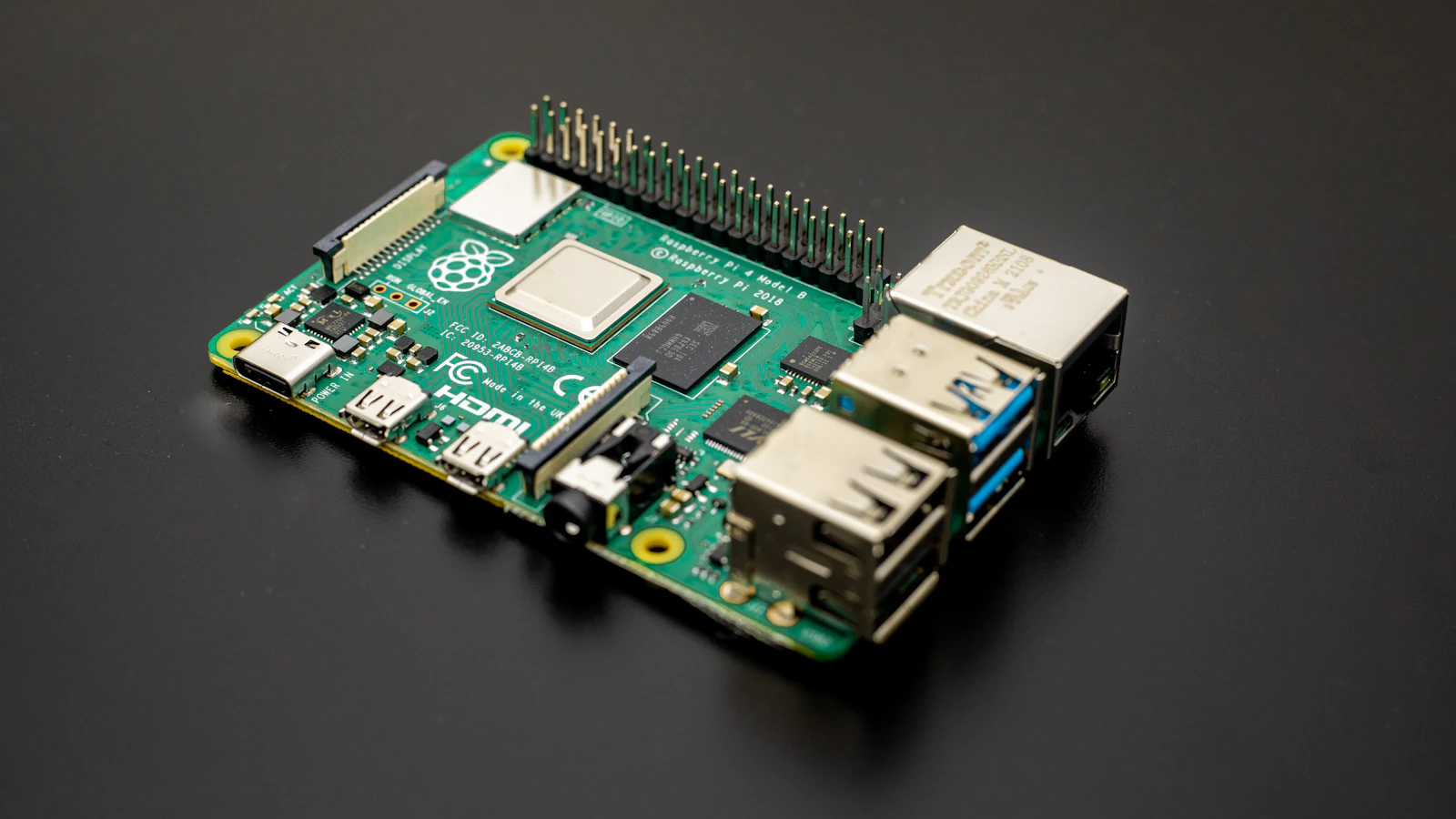
Not as an official release: the OPNsense hardware page says it "is available for x86-64 (amd64)". A community aarch64 repository warns that none of it "is supported by Deciso or the OPNsense core team", and the newest Raspberry Pi images on yrzr.github.io, "OPNsense 23 for aarch64" from July 2023, are "experimental images" that "are NOT official releases".
Dedicated servers
Order a dedicated server
Stock configurations are live in under a minute, with full root and always-on DDoS mitigation on AS55285.
- Stock configurations live in under a minute
- Full root
- Always-on DDoS mitigation





 Canadian and
 Dutch